


China’s transition towards a low‑carbon economy is unfolding within one of the world’s largest banking systems. As key providers of capital, Chinese banks play a critical role in financing industrial upgrading, enabling technological innovation and supporting the country’s long‑term decarbonization objectives.
KEY TAKEAWAYS
- Long‑term policy signals and regulatory incentives drive the integration of sustainability across the financial system in China
- Chinese banks are moving beyond policy alignment to embed green finance into governance, risk management and business strategies, supported by strengthened institutional capacity and expertise
- Banks are developing sector‑specific and locally tailored solutions to support industrial and ecological transition, leveraging technology, local knowledge and partnerships to address the diverse needs of corporates and SMEs
Building a Green Banking Ecosystem in China – The Role of Financial Institutions
The scale-up of green finance has been supported by a strong policy and regulatory environment, with sustainability increasingly integrated into China’s financial supervisory frameworks. Policy direction and structural monetary policy tools such as the Carbon Emissions Reduction Facility have encouraged financial institutions to channel capital towards renewable energy, green technologies and low-carbon development.
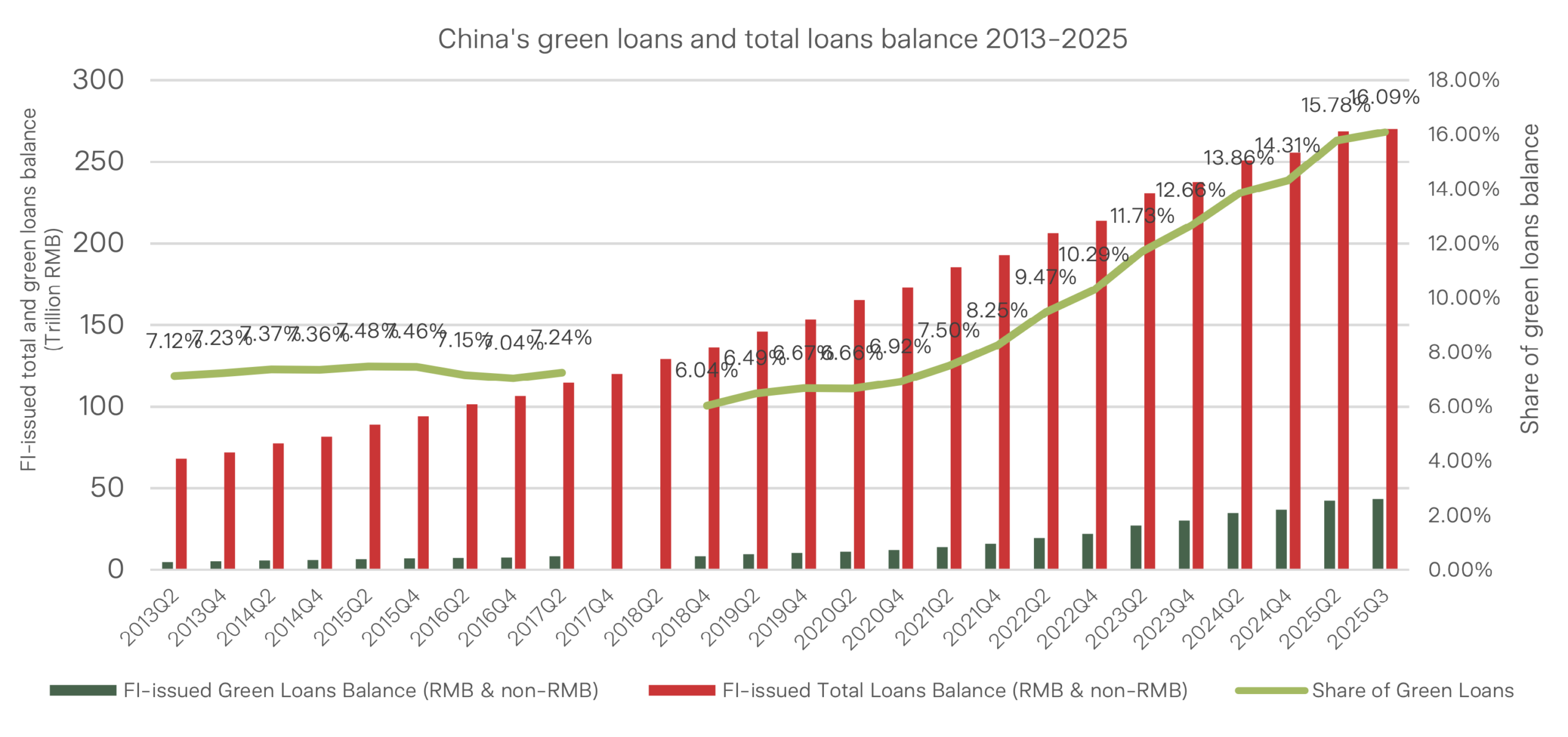
Figure 1: The growing role of green finance in China’s banking system (Griffith Asia Institute and Green Finance & Development Center, 2025)
- China’s banking sector holds more than RMB 480+ trillion in assets, representing around 90% of China’s financial system.
Source: NFRA of China, 2026
- China’s green loans grew at an average annual rate of over 20% during the 14th Five-Year Plan period (2021–2025).
Source: The State Council of the People’s Republic of China, 2026
Over time, China’s green finance agenda has evolved from a focus on environmental risk management in banking toward a broader framework supporting climate action, ecological protection and sustainable economic development. This evolution has been accompanied by the integration of sustainability into banks’ governance, risk management and business strategies.

Figure 2: Evolution of China’s Green Finance Framework (UNEP FI, 2026)
China’s diverse transition challenges, from industrial decarbonisation and technological innovation to the transition of small and medium-sized enterprises (SMEs), require tailored approaches across different levels of the banking system. Large commercial banks provide the scale and capacity needed to support economy-wide transformation, while regional and local banks play a critical role in addressing the specific needs of local industries and businesses. Together, these institutions translate national green finance objectives into practical solutions that support China’s green transition on the ground.
Against the backdrop of economic restructuring and energy security considerations, the strong growth of renewable energy alongside continued expansion of coal capacity reflects the dynamic nature of China’s green transition. To align financial regulation with long-term economic and environmental objectives, China is implementing a range of measures to address transition risks and further strengthen its sustainable finance framework, with the aim of mobilizing significant capital towards sustainable economic activities. These developments highlight the complexity of balancing ambition and implementation in a rapidly changing domestic and global environment.
— Greening China’s Banking System: Analysis of Policy and Regulatory Measures, UNEP FI
CASE HIGHLIGHTS
- How do banks embed green finance into their core operations?
- Advancing integrated green finance solutions
- Expanding green finance through continuous innovation
- Creating synergies between green finance and technology finance
- Supporting SMEs in their green transition
- How does UNEP FI support banks to build capacity for real economy transition?
How do banks embed green finance into their core operations?
Building on this enabling environment, Chinese banks have increasingly moved beyond policy alignment to integrate sustainability into their core governance, risk management and business strategies. ICBC, the world’s largest bank, provides a clear example. Holding over RMB6 trillion in green loans, ICBC has incorporated green finance into its overall development strategy and established a governance structure involving the Board of Directors, senior management and the Green Finance (ESG and Sustainable Finance) Committee, which oversees the implementation of the bank’s ESG and sustainable finance strategies. Sustainability performance is also incorporated into senior management assessments and subsidiary evaluations, ensuring alignment across the group.
ICBC has developed institutional capabilities through enhanced green finance policies, risk management frameworks and talent development systems, including the establishment of a dedicated green finance talent pool and the introduction of due diligence exemption mechanisms. Under this mechanism, eligible green projects that meet predefined sustainability criteria can benefit from simplified due diligence procedures, enabling faster access to financing. To integrate sustainability into credit decision-making, the bank conducts ESG assessments and incorporates climate risk stress testing, NGFS scenario analysis and ESG risk considerations into its credit approval processes. These measures help guide the allocation of financial resources to key industries undergoing green and low-carbon transition.[1]
Advancing integrated green finance solutions
China Construction Bank (CCB) provides an example through its “Shan Jian Lu Xing” green finance solution, which integrates resources across lending, capital markets and other financial services to support clients’ transition across areas such as green and low-carbon energy transition, infrastructure, manufacturing, agriculture and ecological protection.
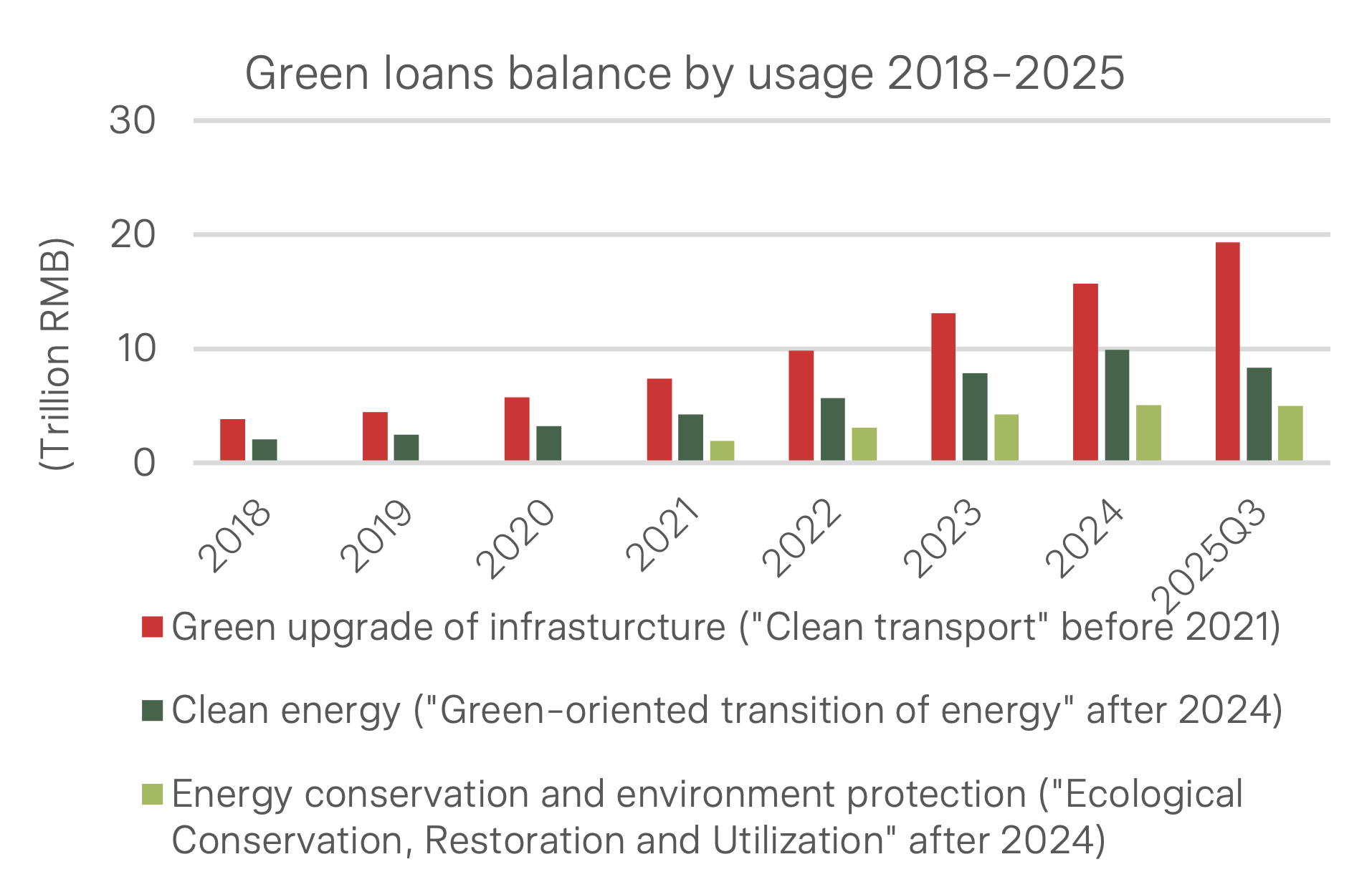
Figure 3: Green loans balance by usage 2018-2025 (Griffith Asia Institute and Green Finance & Development Center, 2025)
By strengthening sector-specific policies and product frameworks, and improving coordination across business lines and subsidiaries, CCB has built one of the largest green loan portfolios in China, deepening client relationships, expanding cross-selling potential, and fostering growth in emerging sustainable finance markets.[2]
At the local level, Anji Rural Commercial Bank, a local financial institution in Anji, has developed a county-level green finance model that leverages the region’s ecological resources and distinctive industries. Anji is the birthplace of the “Two Mountains” concept, a key principle guiding China’s approach to green development that emphasises the balance between ecological conservation and economic growth. The bank offers products such as the “Two Mountains White Tea Loan”, “Green Factory Loan” and “Ecological Restoration Loan” which embed green production practices into credit assessments and move beyond traditional collateral-based lending to finance ecological rehabilitation and link environmental improvement with cultural and tourism development.[3]
Together, these examples illustrate how integrated and locally tailored financial solutions can incentivize sustainable practices, and support both wide-scale transformation and rural revitalization.
Expanding green finance through continuous innovation
Industrial Bank (CIB) illustrates how innovation in financial instruments and service models can expand the scope of green finance. A distinctive feature of CIB’s approach is its “commercial banking + investment banking” model, which combines lending capabilities with investment banking and capital market services. Through this model, the bank has developed a diversified green finance portfolio, including green loans, green bonds, asset-backed securities (ABS) and infrastructure real estate investment trusts (REITs), providing integrated solutions for clients’ financing and transition needs. Beyond product innovation, CIB has developed transition finance practices for hard-to-abate sectors such as steel, power and construction. By combining sectoral transition research with tailored financial services, CIB supports companies in these industries through solutions such as energy-saving upgrades, cleaner production technologies and transition-oriented financing, helping them gradually reduce carbon intensity and align with long-term decarbonization pathways. It has also built institutional frameworks in emerging fields such as ESG assessment, biodiversity finance and carbon finance, enabling more sophisticated evaluation of environmental risks and opportunities.[4]
The combination of top-down and bottom-up approaches is a key feature of China’s green finance development. China’s approach to greening the financial system reflects its administrative and institutional historical traditions, combining top-down policy direction with local-level implementation and piloting. For example, many regulatory measures are issued through administrative bodies as high-level policy instruments, rather than through the legislature as legal instruments. These high-level policy instruments provide strategic guidance and serve as reference points for provinces and municipalities to adapt and pilot for local contexts.
— Greening China’s Banking System: Analysis of Policy and Regulatory Measures, UNEP FI
Creating synergies between green finance and technology finance
As green technologies become increasingly important drivers of industrial upgrading, banks are exploring ways to support both technological innovation and low-carbon transition. Drawing on Beijing’s strong innovation ecosystem, Bank of Beijing (BOB) has developed specialized technology finance capabilities to support technology-driven enterprises and emerging green industries, aligned with China’s broader policy priority of strengthening technology finance. To strengthen these capabilities, BOB has established a dedicated technology finance service structure of “1+18+N”, comprising a technology finance department at the Head Office and specialized technology finance teams across 18 branches, and a network of technology-focused institutions serving technology enterprises and innovative SMEs. Building on this specialized structure, BOB provides tailored financing solutions to support technology enterprises at different development stages, including R&D financing and intellectual property-based financing solutions. Through its partnership with Moore Threads, a high-tech graphics processing unit (GPU) company, BOB provided initial financing and facilitated access to Beijing’s first-loan subsidy programme to support the company’s development.[5]
Supporting SMEs in their green transition
SMEs are essential components of regional economies and green value chains, but often face challenges in financing green technology upgrades, equipment renewal, and low-carbon transformation. Leveraging its deep understanding of local industries and enterprises, Shanghai Rural Commercial Bank (SHRCB) has integrated green finance with inclusive finance to support SMEs and local economic transition. In 2025, SHRCB launched its “Lv Xin Tong Zhou” brand, reflecting the idea of working together to advance green development. The brand integrates green lending, green bonds, green retail finance and green leasing to provide more integrated green finance solutions. The bank has also developed financing models tailored to local transition needs. For example, in partnership with the Shanghai Water Authority, SHRCB provided a green loan secured by water rights for water-saving upgrade projects undertaken by small and medium-sized manufacturing enterprises in industrial clusters across Shanghai. The financing terms were linked to customers’ water-use performance, encouraging enterprises to improve water resource efficiency.[6]
How does UNEP FI support banks to build capacity for real economy transition?
To improve competitiveness, increase operational resilience, and realize commercial growth, banks need practical approaches to develop transition strategies, support client transition, integrate sustainability considerations into risk management and governance frameworks.
Through the Principles for Responsible Banking, UNEP FI helps banks navigate risks, opportunities and impacts across four interconnected priorities — climate, nature, human rights and healthy & inclusive economies — guiding their work on assessment and management of risks and impacts, strategy setting and action through transition planning and transition finance.
Banks need to strengthen capabilities both externally and internally. Effective engagement is essential for understanding clients’ transition needs, developing credible pathways and aligning financing with sustainability objectives. Banks also need to embed sustainability risks into existing risk management frameworks. UNEP FI’s guidance on client engagement and its conceptual framework for sustainability risk integration provide practical approaches to help banks strengthen these capabilities, from effective client engagement to incorporating sustainability considerations into governance, risk management and decision-making processes.
Resources such as the Guide to Transition Plans for Banks and Transition Finance: Emerging Practices provide further guidance for banks seeking to support real economy transformation, while UNEP FI’s work on China’s green finance landscape offers insights into the country’s evolving policy environment and emerging practices in sustainable finance.
Read the Chinese-language version of this case here.
[1] Industrial and Commercial Bank of China, 2026, 2025 Sustainability Report
[2] China Construction Bank, 2026, 2026 Semi-annual Sustainable Finance Report
[3] Anji Rural Commercial Bank, 2025:《“两山”理念 绿色答卷——逐绿前行 点绿成金》
[4] Industrial Bank, 2026, Sustainability Report 2025
[5] Bank of Beijing, 2026, 《北京银行股份有限公司2025年可持续发展报告》
[6] Shanghai Rural Commercial Bank, 2026: 《2025年度可持续发展报告》