


Asia Pacific’s rapid economic development has been accompanied by growing demand for natural resources, placing increasing pressure on ecosystems and biodiversity. Moving beyond the linear “take-make-waste” model, in which resources are extracted, transformed into products and eventually discarded, towards a circular economy can help decouple economic activity from resource consumption, waste generation and environmental degradation.
KEY TAKEAWAYS
- Innovative financing approaches can help scale circular solutions across sectors and value chains, creating new revenues and collateral streams that make circular projects bankable.
- Supporting clients in adopting circular business models can present new financing and product opportunities, while strengthening business resilience of clients and future-proofing bank portfolios.
- Financing circular solutions can support nature-positive and resource-efficient growth in Asia Pacific.
How APAC Banks Are Closing the Circular Economy Gap
By reducing resource extraction, waste and pollution, circular business models can help address key drivers of biodiversity loss while strengthening business resilience and reducing exposure to nature-related risks.
For banks, this creates an opportunity: supporting clients in adopting circular business models can contribute to nature-positive outcomes while opening new areas for financing and business engagement.
While financing and investment in the circular economy have grown in recent years, substantial gaps remain, particularly for the infrastructure, innovation and small and medium-sized enterprises needed to scale circular solutions.[1]
In Asia Pacific, these gaps are particularly visible in areas such as plastic circularity, where private finance has so far played a limited role. [2]
The challenge is not only to mobilise more finance, but also to direct capital towards solutions that reduce resource use and waste at source.
Through lending, investment, client engagement and risk management, banks can influence how capital is allocated across sectors and value chains, helping businesses move from linear models towards more resource-efficient and circular practices.
The following bank examples illustrate how banks in Asia Pacific are putting this role into practice.
They highlight different approaches to financing circular solutions: using ecosystem value to underpin finance, turning waste into bankable revenue streams, and using blended finance to help engineer viable risk-return profiles.
These approaches demonstrate how banks can help scale circular solutions while contributing to more resilient and nature-positive economies.
- +75% Potential increase in APAC domestic material consumption between 2020 and 2060 if historical trends continue.
Source: UN ESCAP, 2022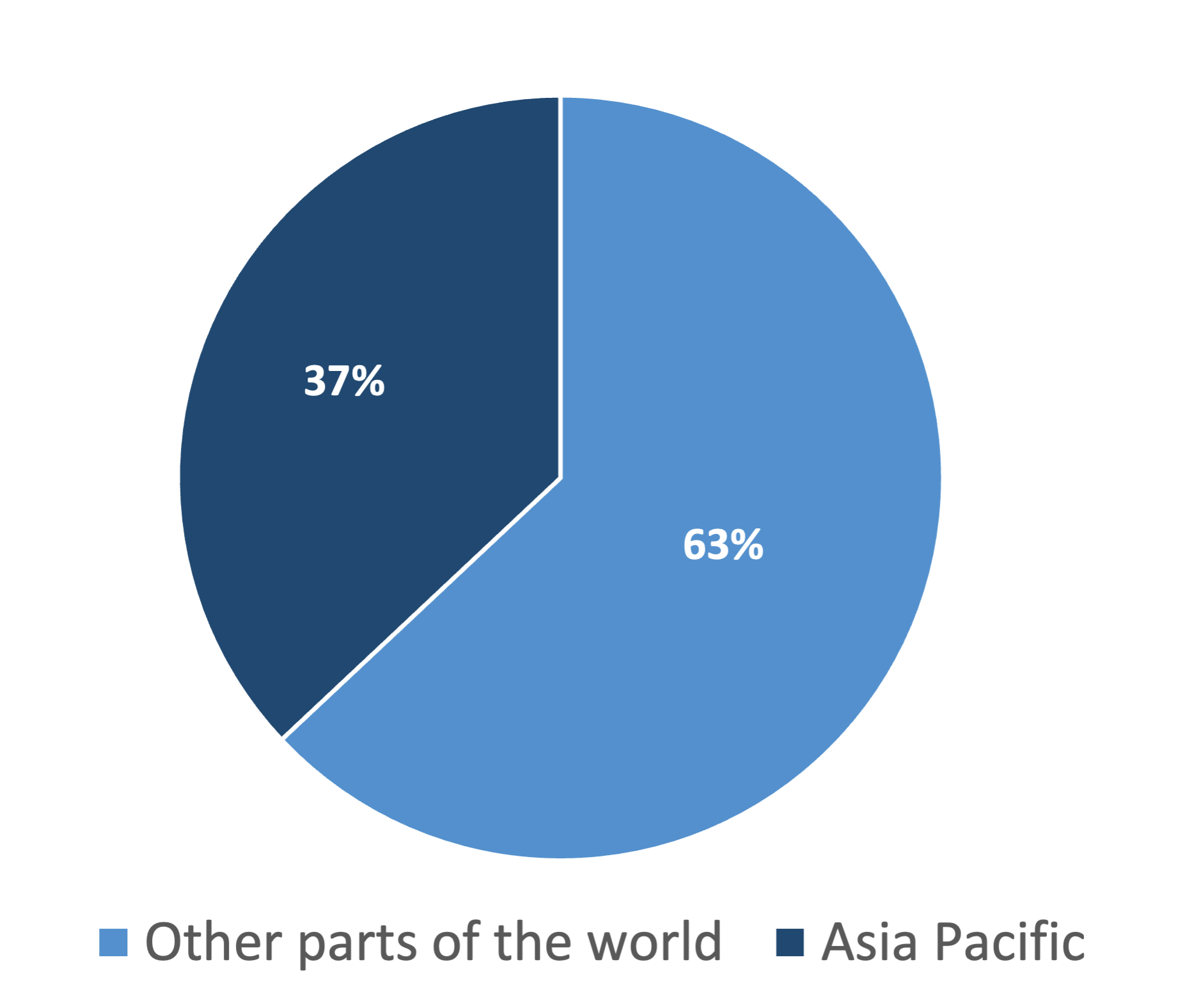
Figure 1: Global Material Consumption 2020s, 100% on total; Source: UN ESCAP, 2022
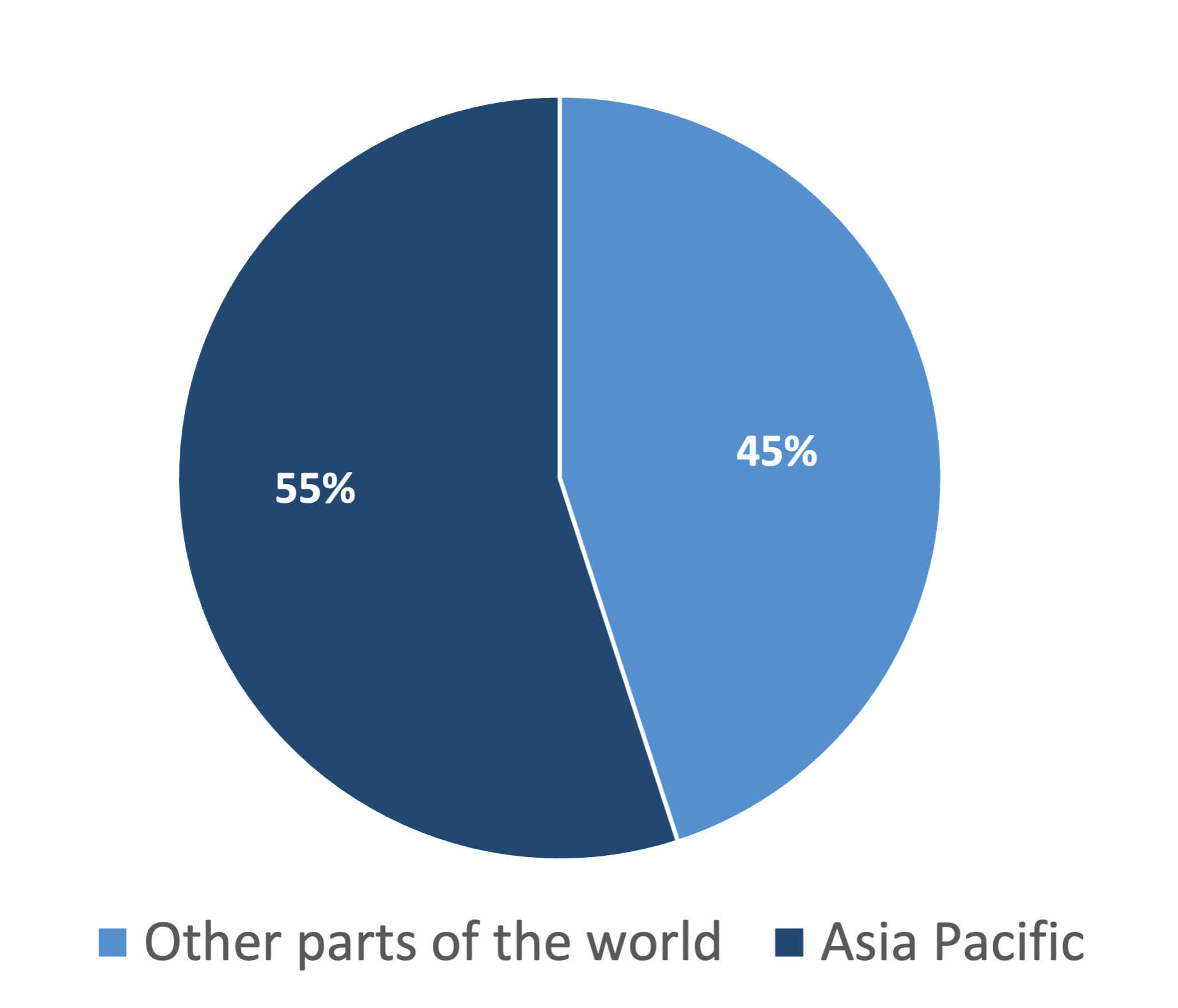
Figure 2: Municipal Solid Waste Generation: Global vs Asia Pacific ; Source: UN ESCAP, 2024
CASE HIGHLIGHTS
- From waste to value: connecting agriculture solutions to the market
- From lower-cost finance to ecosystem value: supporting circular infrastructure and ecological restoration
- Blended finance and partnerships: scaling sustainable finance for resource efficiency
- How UNEP FI Supports Circular Economy Action in the Banking Sector
FEATURED BANKS
From waste to value: connecting agriculture solutions to the market
The Norinchukin Bank has partnered with TOWING Ltd., a startup originating from Nagoya University, to promote the use of Soratan, a biochar produced from plant and food-processing residues in Japan. The initiative puts biological residues to productive use in agriculture while supporting soil improvement and carbon sequestration.
Soratan is produced by carbonising plant and food-processing residues and combining the resulting biochar with selected soil microorganisms and organic fertilisers. When applied to agricultural land, it functions as a soil amendment, improving soil quality while storing carbon. To support wider adoption, the Bank leverages its networks and sector knowledge across Japan’s agriculture and food sectors, connecting TOWING with producers, cooperatives, agribusinesses and other value-chain partners. The Bank also supports the expansion of sales channels for Soratan and explores opportunities for the generation, and intermediation of carbon credits associated with biochar-based carbon sequestration.
The initiative creates a circular flow in which residues become a valuable agricultural input rather than being discarded. It also forms part of the Bank’s broader efforts to support more sustainable food and agriculture value chains, including reducing reliance on conventional agricultural inputs derived from imported raw materials and fossil fuels. This case illustrates how banks can support circular agriculture by using their sector networks and partnerships to connect technology providers with producers, cooperatives, agribusinesses and other value-chain partners. By helping circular solutions move from technology development to market adoption, banks can help expand market opportunities for circular agricultural solutions, including through carbon-credit generation and intermediation.
From lower-cost finance to ecosystem value: supporting circular infrastructure and ecological restoration
Bank of Jiangsu has used different financing mechanisms to support circular economy activities across environmental infrastructure, water management and ecological restoration in eastern China.
In Jiangsu Province, the Bank participates in the Eco-environmental Infrastructure Loan (环基贷), a provincial-level green finance policy instrument launched in 2023 that uses fiscal interest subsidies to reduce financing costs for eligible environmental projects, with risk-compensation or guarantee support where applicable. Eligible projects include wastewater treatment, solid-waste treatment and resource recovery, ecological restoration and pollution control, as well as investments in cleaner production, industrial water reuse and resource efficiency.
The Bank has also used an ecosystem-product-value (VEP) backed financing structure to support an ecological-oriented development project in Anji, Zhejiang Province. As part of the financing structure, the Bank assessed the value of ecosystem services generated by freshwater, land and forest ecosystems in the project area, including water conservation, flood regulation and recreation. This assessment helped establish the ecological asset and collateral basis for the financing. The bank approved more than RMB 1.6 billion in long-term financing for the project’s first phase, supporting wetland and river restoration, wastewater treatment and reclaimed-water reuse, as well as resource-efficient buildings and green public infrastructure. Upon completion, the project is expected to achieve a sewage treatment rate of 98% and restore 7,800 metres of ecological riverbanks.
By combining policy-supported lending to reduce financing costs with ecosystem valuation to strengthen financing structures, Bank of Jiangsu demonstrates how banks can direct capital towards water reuse, waste treatment, ecological restoration and resource-efficient infrastructure, while supporting investments with measurable environmental benefits.
Blended finance and partnerships: scaling sustainable finance for resource efficiency
Golomt Bank’s sustainable finance activities include financing solutions that promote more efficient use of water and other resources, alongside support for small and medium-sized enterprises (SMEs) in Mongolia.
To mobilise capital for these activities, the Bank partners with international financial institutions, including the International Finance Corporation (IFC), Proparco, the private sector financing arm of the Agence Française de Développement (AFD) Group, and BlueOrchard, an impact investment manager focused on sustainable investments in emerging and frontier markets. Under a USD 160 million financing package, up to 60% of the funds were allocated to environmental projects, including investments in water efficiency, sanitation, water supply and energy efficiency, with up to 25% dedicated specifically to blue finance activities. The remaining proceeds support SMEs, particularly women-led businesses. The Bank has also secured a USD 13 million senior loan from WaterEquity, with 100% of the proceeds dedicated to initiatives that improve access to safe drinking water and sanitation.
Golomt Bank applies environmental eligibility criteria to direct financing towards resource-efficient activities, including water-saving technologies and energy-efficient systems that can reduce water losses, lower resource consumption and improve resource productivity. The financing also supports water supply and sanitation infrastructure, contributing to improved access to essential services. Through partnerships with international financial institutions and its financing network, the Bank also extends sustainable finance to SMEs, including women-led and rural enterprises.
Financed activities were aligned with IFC sustainability standards and the Bank’s internal environmental targets, with environmental eligibility criteria and impact monitoring in place to help assess outcomes and reduce greenwashing risks. These measures form part of the Bank’s broader sustainability strategy, which includes targets to reduce its climate impact by 30% and its impact on water resources by 5% by 2030.
How UNEP FI Supports Circular Economy Action in the Banking Sector
The UN Principles for Responsible Banking (PRB) provide a framework for banks to integrate circular economy considerations into their strategies, portfolios and client engagement. UNEP FI’s circular economy resources translate this ambition into practical approaches, helping banks assess the circularity of client activities, identify transition opportunities and align financing with more resource-efficient business models (UNEP FI, 2025). UNEP FI has developed a series of sectoral guidelines for commercial banks and development finance institutions, providing practical tools for commercial banks and development finance institutions to assess clients’ circularity, identify opportunities for transition and translate circular economy principles into financing decisions and client engagement across key sectors.
The latest Circular Solutions to Achieve Nature Targets guidance builds on this work by connecting circular economy solutions with banks’ nature-related dependencies, impacts, risks and opportunities. It provides practical approaches for integrating circularity into governance, risk management, sector strategies, client engagement and financing, while supporting banks in advancing their PRB nature targets. The three cases featured in this article are drawn from this guidance. Explore the full report for further examples and practical approaches to applying circular solutions across sectors and ecosystems.
[1] UNEP FI, Unlocking Circular Economy Financing: From Vision to Action, 2025
[2] ADB, Financing Plastic Circularity in Asia and the Pacific: How to Overcome Market and Policy Challenges and Create Impact, 2024