19 December 2023Banking, Climate Change, Impact, Insurance, Investment, Nature, News, Policy, Pollution & Circular Economy, Social
POPULAR CONTENT
19 December 2023Banking, Climate Change, Impact, Insurance, Investment, Nature, News, Policy, Pollution & Circular Economy, Social

19 December 2023Climate Change, News

18 November 2012News
Banking | 09 October 2026
There is no excerpt because this is a protected post.

Climate Change, News, Policy | 08 October 2026
Ahead of the 2026 United Nations Climate Change Conference (COP31), this article discusses the Turkish and Australian Presidencies’ priorities and key moments expected to shape the road to COP31 and their implications for financial institutions. It also lists UNEP FI’s planned activities and initiatives at the COP.

News, Policy | 05 October 2026
This article, co-authored by De Nederlandsche Bank (DNB) and UNEP FI explores the interconnections of climate change and geopolitical volatility and where banks’ existing capabilities may help address both.

Banking, News, Principles for Responsible Banking | 22 September 2026
Over 350 banks – representing more than 85 countries and approximately half of the global banking sector by value (~99…

Banking, Principles for Responsible Banking, Publications, Risk | 21 September 2026
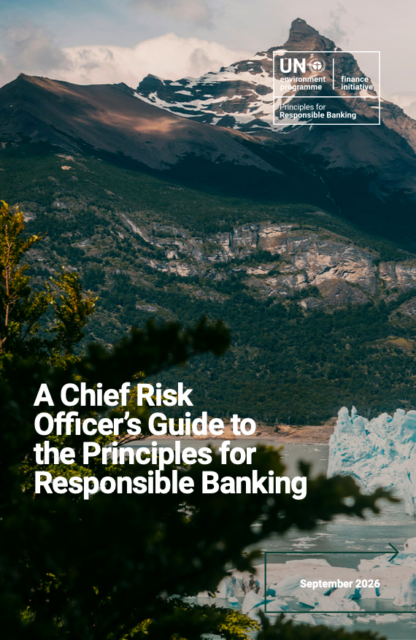
A Chief Risk Officer’s Guide to the Principles for Responsible Banking explains how CROs and their teams can implement the PRB through the bank’s existing risk management framework. It connects each of the six Principles to the core elements of risk management, with practical actions, questions to ask, and case studies from signatory banks.
Asset Owner Alliance, Climate Change, Investment, News | 17 September 2026
Updated NZAOA Call to Action gives clear guidance on what some of the world's largest asset owners look for from firms managing their private market investments

Asset Owner Alliance, Investment, Publications | 17 September 2026
This guidance gives asset owners and managers a shared foundation for clearer, more consistent dialogue.

Climate Change, Insurance, News | 17 September 2026
UNEP and the Insurance Association of Türkiye (TSB) will co-host the flagship COP31 Global Sustainable Insurance Summit on 13-14 November 2026 at the Insurance House during the UN Climate Change Conference in Antalya, Türkiye.

Banking | 16 September 2026
Year 6 Update >> In 2019, a pioneering group 130 global banks became signatories to the UN Principles for Responsible…
Banking, Nature, Publications, Risk | 16 September 2026
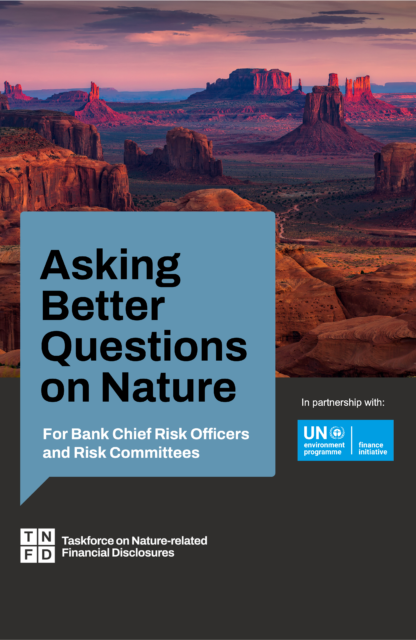
This guide helps risk professionals at banks gather the information they need to monitor and manage nature-related risks and opportunities across their portfolios. Structured around ten questions, the guide helps banks better understand their nature-related impacts, capabilities, and management practices – and turn that understanding into greater resilience and future opportunities.