Nature is the foundation of our economies, societies, and planetary health. More than half of global GDP moderately or heavily depends on healthy ecosystems, making the protection and restoration of natural capital essential for remaining within planetary boundaries and ensuring economic resilience.
Banks and insurers, as well as their clients and customers, are increasingly exposed to the impacts of biodiversity loss and ecosystem degradation. UNEP FI’s role is to enable financial institutions to strengthen the resilience of their own businesses and engage clients to adapt practices towards a nature‑positive economy.
The Principles for Responsible Banking (PRB) and Principles for Sustainable Insurance (PSI) provide banks and insurers with the strategic framework for embedding sustainability at the core of their business strategies. UNEP FI’s nature work equips PRB and PSI signatories with the scientific insight, guidance and tools needed to integrate nature at the heart of financial decision-making. By connecting science, policy and finance, UNEP FI strengthens the institutional capacity of banks and insurers to better understand and manage nature-related risks and opportunities.
Through engagement with regulators, policymakers and other stakeholders such as standard setters, UNEP FI helps build the enabling environment needed for finance to act as a powerful catalyst for nature. As part of this work, UNEP FI actively contributes to the implementation of the Kunming–Montreal Global Biodiversity Framework (GBF) and supports the Convention on Biological Diversity (CBD) on finance sector outreach and ambition setting.
Advancing nature finance across key ecosystems
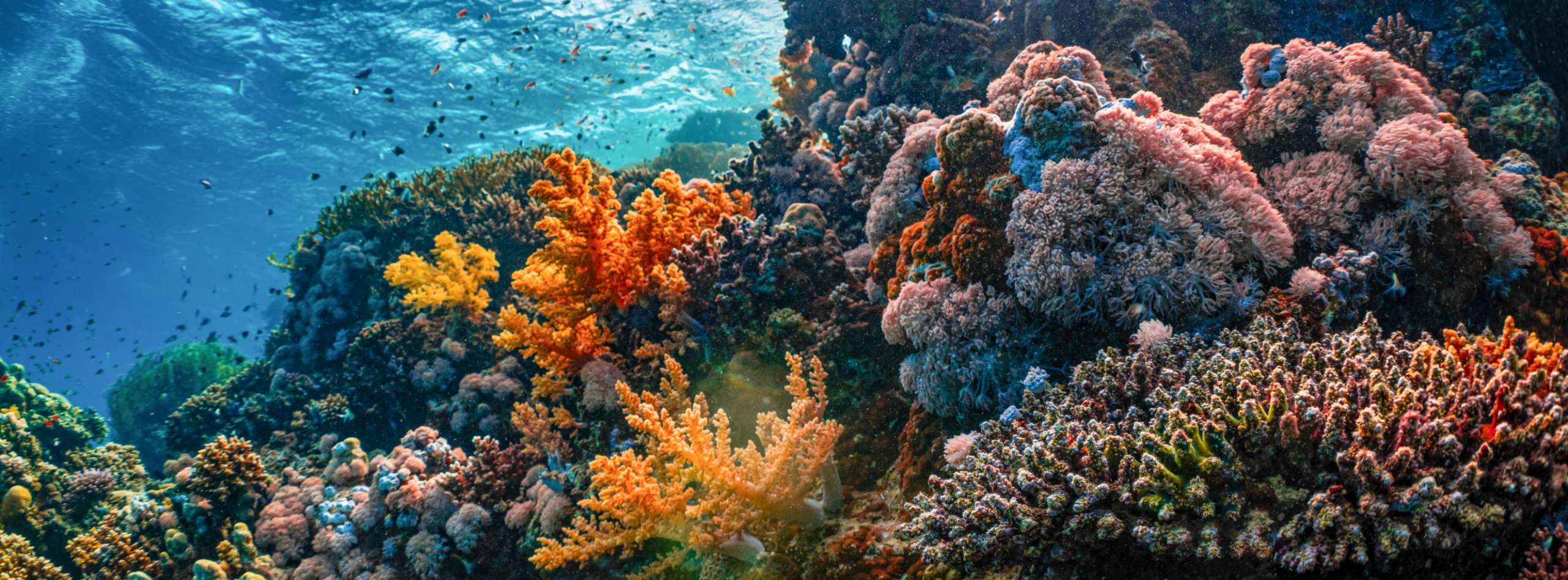
Ocean

As ocean health declines, financial risks increase. Conversely, redirecting capital toward a sustainable blue economy unlocks innovation, strengthens market resilience, and supports long‑term value creation. Through its work focusing on boosting a Sustainable Blue Economy, UNEP FI helps financial institutions align capital flows with SDG 14 “Life Below Water” and global climate–nature goals. UNEP FI contributes to setting the standards for blue finance through publications, such as the Ocean Investment Protocol, which have become reference points for market development.
To learn more about our blue finance work and get involved, please click here.
Freshwater

Water scarcity, pollution, and ecosystem degradation are already costing companies billions—placing an estimated USD 15.5 billion in assets at risk globally. UNEP FI helps financial institutions assess and manage freshwater‑related risks, strengthen long‑term portfolio resilience, and contribute to progress toward SDG 6 “Clean Water and Sanitation”. This includes capacity‑building for members and engagement with supervisors and regulators to integrate freshwater considerations into national and regional frameworks.
To learn more or get involved, please contact us.
Food systems

Food production and transport are major drivers of nature loss and greenhouse gas emissions. UNEP FI supports financial institutions in reducing exposure to food-system risks while strengthening food security through initiatives such as the Good Food Finance Network’s High Ambition Group, along with resources that help scale up capital for sustainable food systems.
To learn more or get involved, please contact us.
Forests and land

Forests and land ecosystems are critical for climate stability, biodiversity, food security, and sustainable economic development. UNEP FI works with the finance sector to manage risks linked to deforestation, land‑use change, soil degradation, biodiversity loss, and climate‑driven shocks. Through sector-specific guidance, UNEP FI helps banks, insurers, and investors avoid stranded assets, supply‑chain disruption, regulatory risks, and reputational harm. At the same time, we highlight investment opportunities in regenerative agriculture, ecosystem restoration, reforestation, and nature‑positive business models.
To learn more or get involved, please contact us.